Reef Persistence Model

FRESCA's very own John Morris walks us through the Module 3 Reef Persistence Model workflow in under two minutes!

Summary

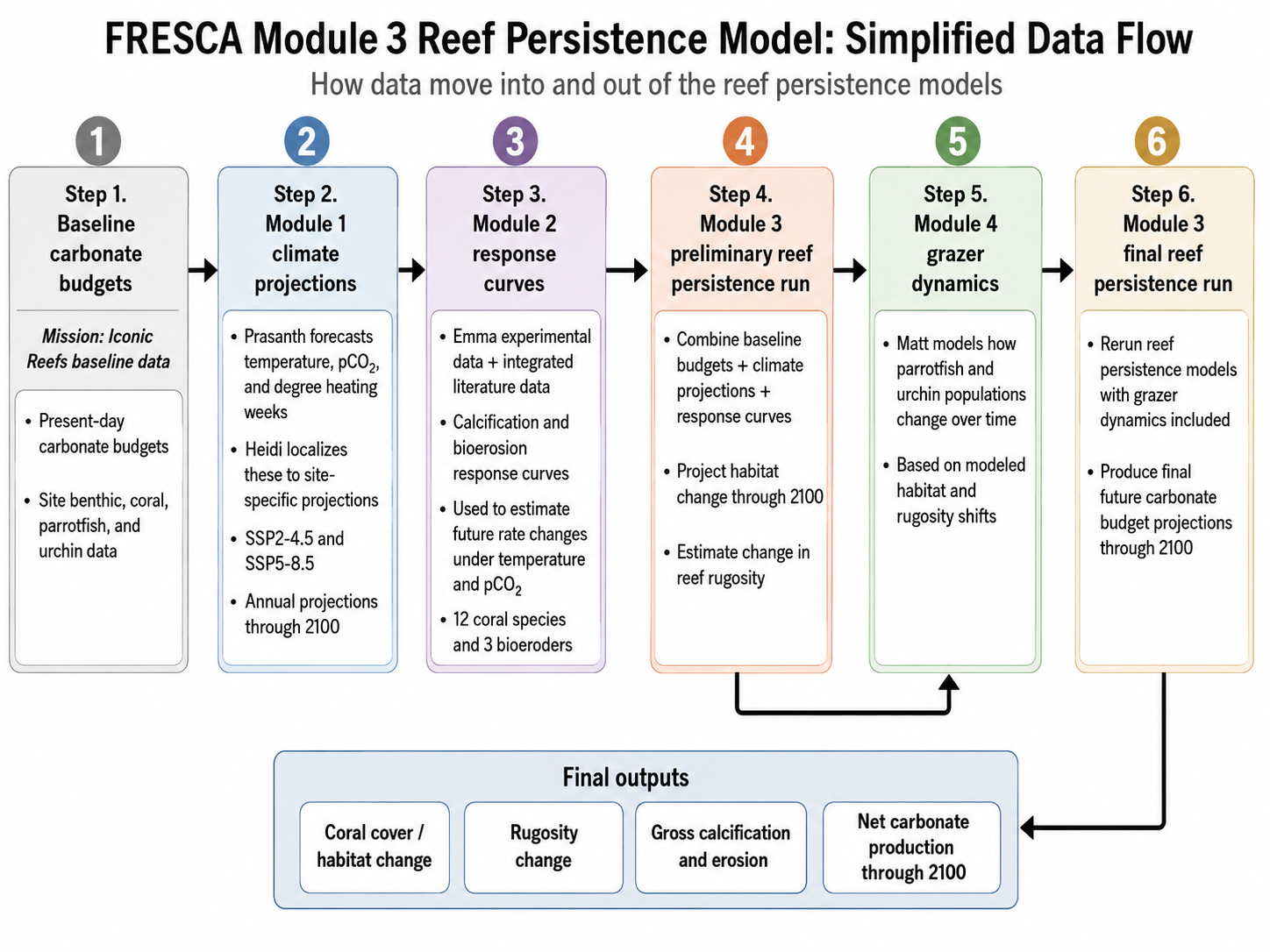
By integrating key findings from Module 1 and Module 2 concerning both the distribution of stressors and identified thresholds of specific species, the Reef Persistence Model (Module 3) will be able to determine the effectiveness of a variety of reef restoration scenarios, including reef zones within each site.

Video introductions to each step of the process are available below the flowchart.

Step 1

Baseline carbonate budgets
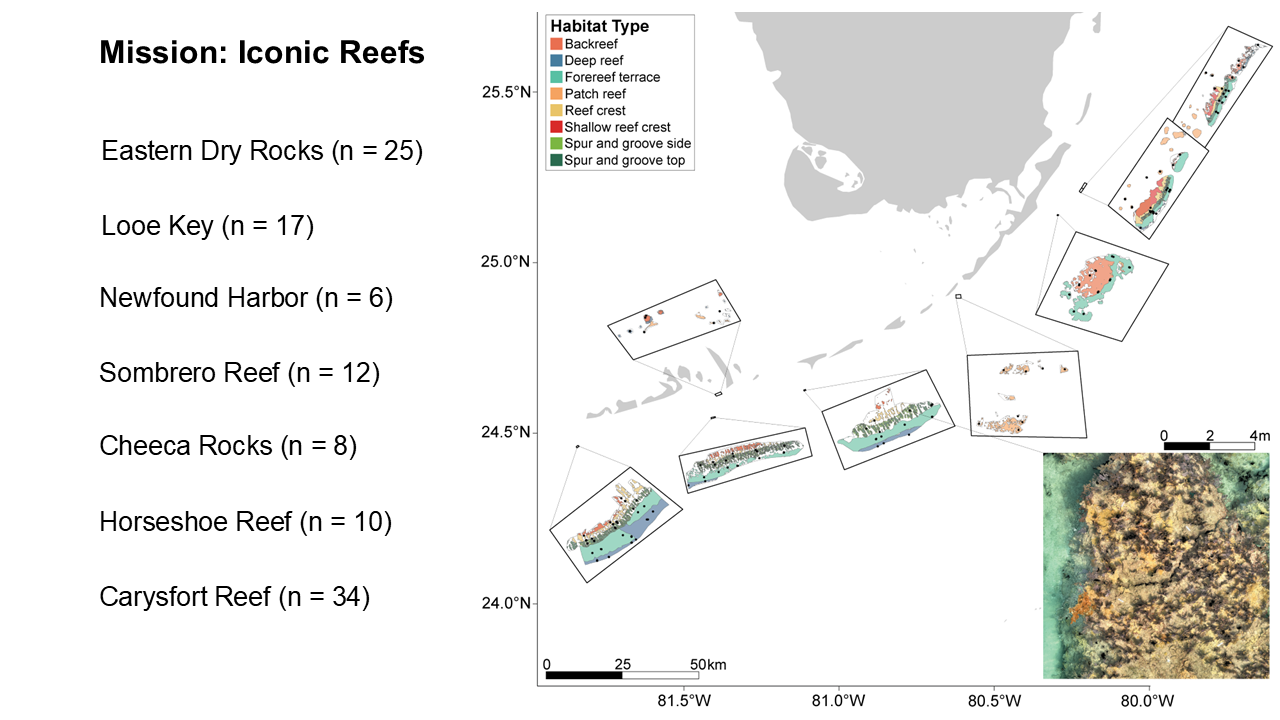
Mission: Iconic Reefs baseline data
  • Present-day carbonate budgets
  • Site benthic, coral, parrotfish, and urchin data
Study areas

Step 2

Module 1 climate projections
  • Prasanth forecasts temperature, pCO2, and degree heating weeks
  • Heidi localizes these to site-specific projections
  • SSP2-4.5 and SSP5-8.5
  • Annual projections through 2100
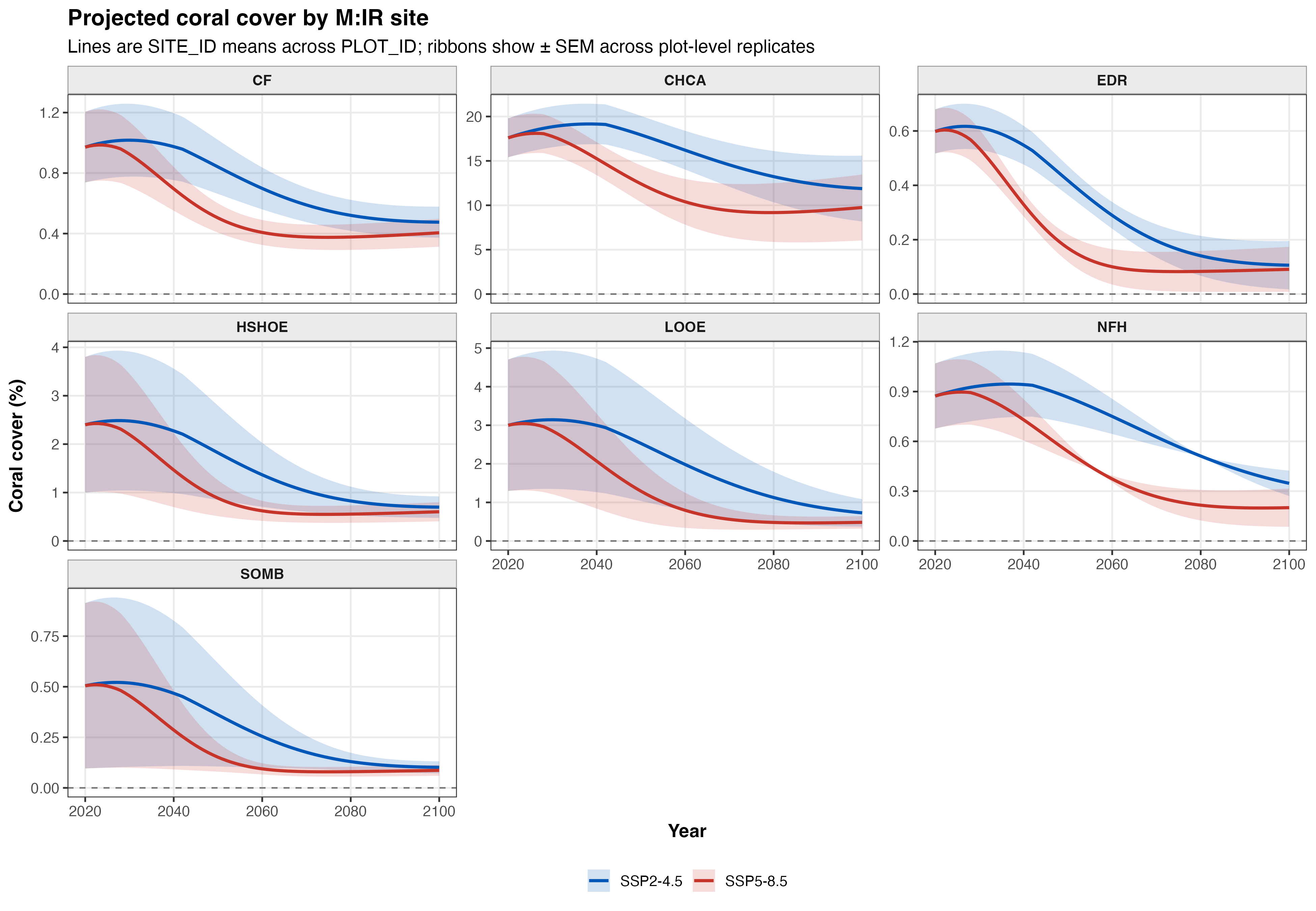
Examples of Module 1 predictions

Step 3

Module 2 response curves
  • Emma experimental data + integrated literature data
  • Calcification and bioerosion response curves
  • Used to estimate future rate changes inder temperature and pCO2
  • 12 coral species and 3 bioeroders
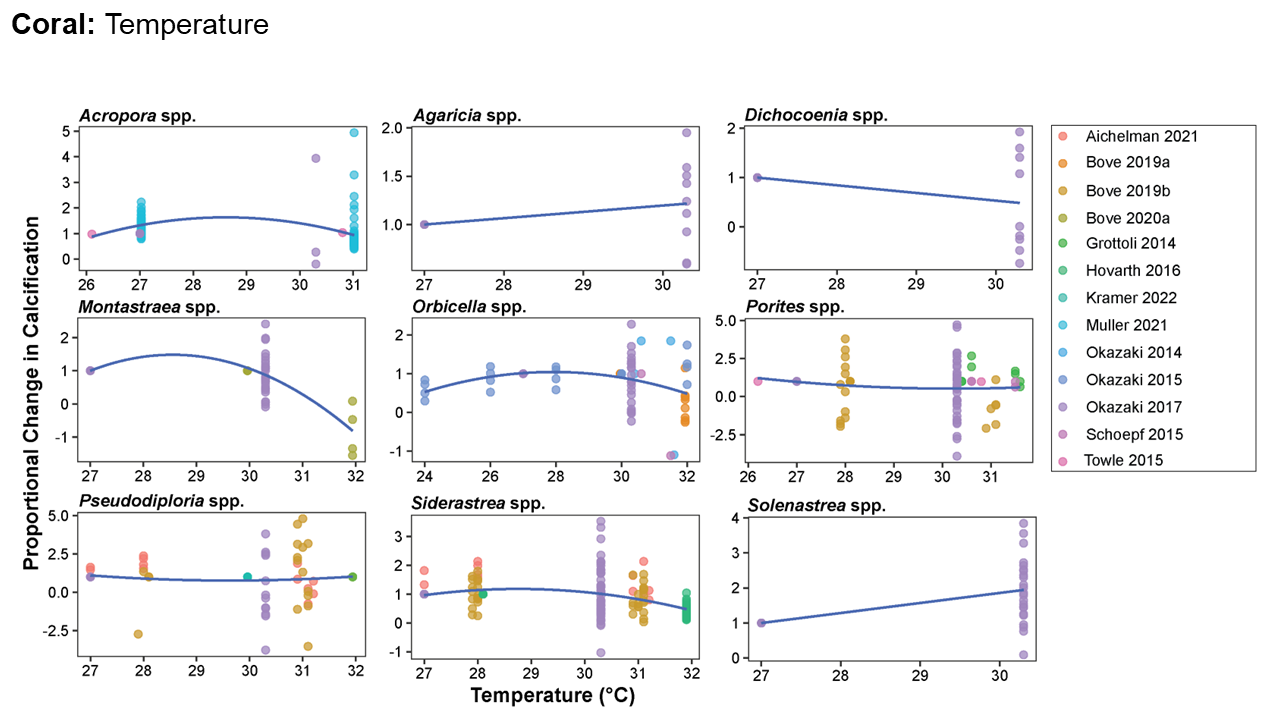
Examples of Module 2 response curves

Steps 4 - 6

Module 3 preliminary reef persistence run
  • Combine baseline budgets + climate projections + response curves
  • Project habitat change through 2100
  • Estimate change in reef rugosity
Module 4 grazer dynamics
  • Matt models how parrotfish and urchin populations change over time
  • Based on modeled habitat and rugosity shifts
Module 3 final reef persistence run
  • Rerun reef persistence models with grazer dynamics included
  • Produce final future carbonate budget projections through 2100

Data and Resources